
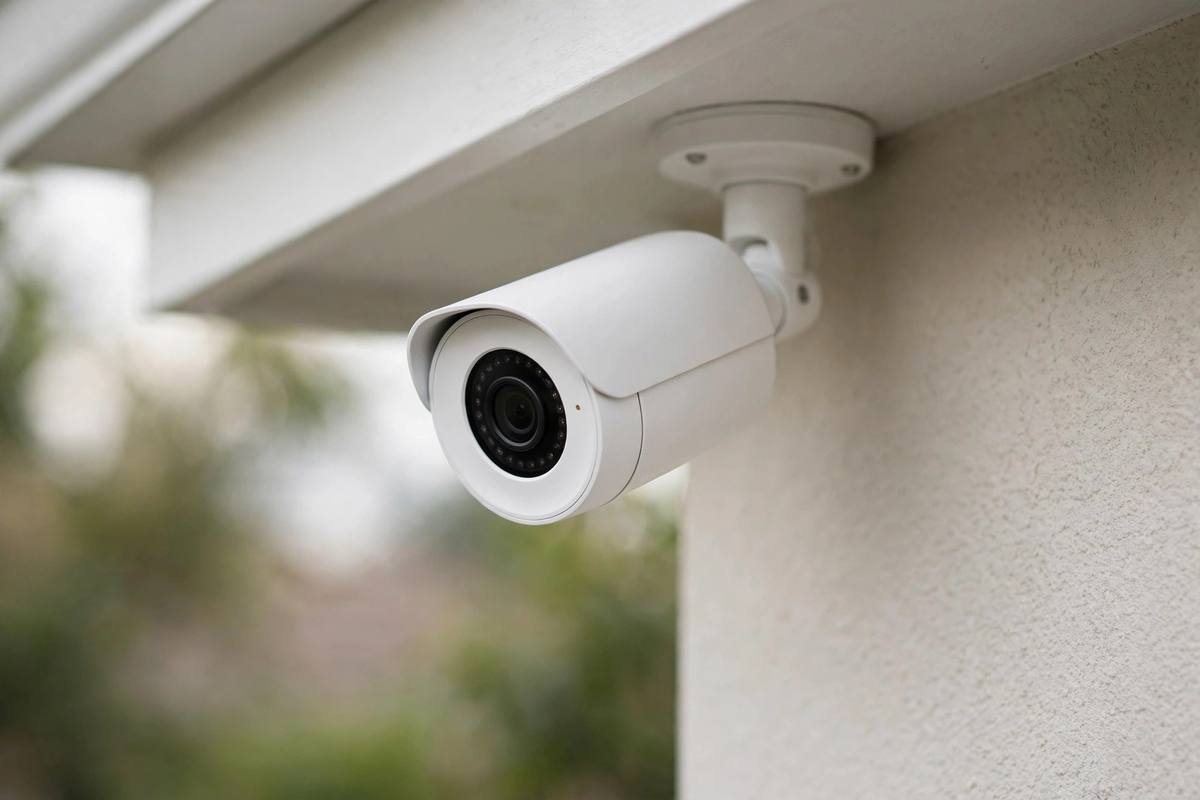
A camera is only useful if you can answer three questions from its footage: who was there, when, and what did they do. If the clip shows a blurry hat brim walking past, the camera is in the wrong place, no matter how good the camera is. Walk your property once with this guide in mind before you drill a single hole.
1. Start with the doors people actually use
Every home has a front door, but not every visitor uses it. Delivery drivers cut through the side gate. Family comes in through the garage. Start with the door you use most, then the door a stranger would try second. A doorbell camera covers the front door well, but it cannot see the side gate, so count your entries before you count your cameras.
2. Mount it about eight feet up, angled slightly down
Too high and you film the top of heads. Too low and anyone can reach it, or it only sees legs. Around eight feet, tilted down just enough to catch a face at the door, is the sweet spot for most Escondido homes. If the camera watches a long driveway, aim it down the path so a person walks toward it, not across it. A face walking toward the lens is worth ten side profiles walking past.
3. Light matters more than resolution at night
A camera that sees beautifully at noon and goes blind at night is not helping when it counts. Now that evenings are dark, check what the spot looks like after sunset. A porch light near the camera does more for night footage than a higher resolution spec. And never point a camera straight into a porch bulb or the setting sun: the glare whites out the exact face you want to see. Stand where the camera will sit and look at what the light does.
4. Cover the paths, not just the doors
Doors matter, but paths tell the story. A camera over the driveway shows which car came and went. One watching the side yard shows whether someone walked around the back. One at the backyard gate shows the way in that nobody thinks about. You do not need a camera on every wall. You need one on every way in, and one on the path between them.
5. Check the phone view before you mount it for good
Hold the camera in place, or tape it there for a day, and look at the live view on your phone. Walk the path yourself, at night if you can, and see what you actually get: a face, or a hat. Move it a foot left or right and check again. Small moves make a big difference, and it is much easier to move a camera before the mount is screwed in than after.
Not sure which spots cover your home without turning it into a fortress? That is exactly what a free home visit is for. We walk the entries and paths with you, look at the light after dark, and hand you a written plan before you commit to anything.